PLANTS
Why do some leaves change color?
Leaf color depends on pigments and how their amounts shift. Light, temperature, and seasonal changes influence what colors become visible.
From cells to forests, life depends on systems that interact. Explore how organisms grow, respond to their surroundings, and depend on one another.
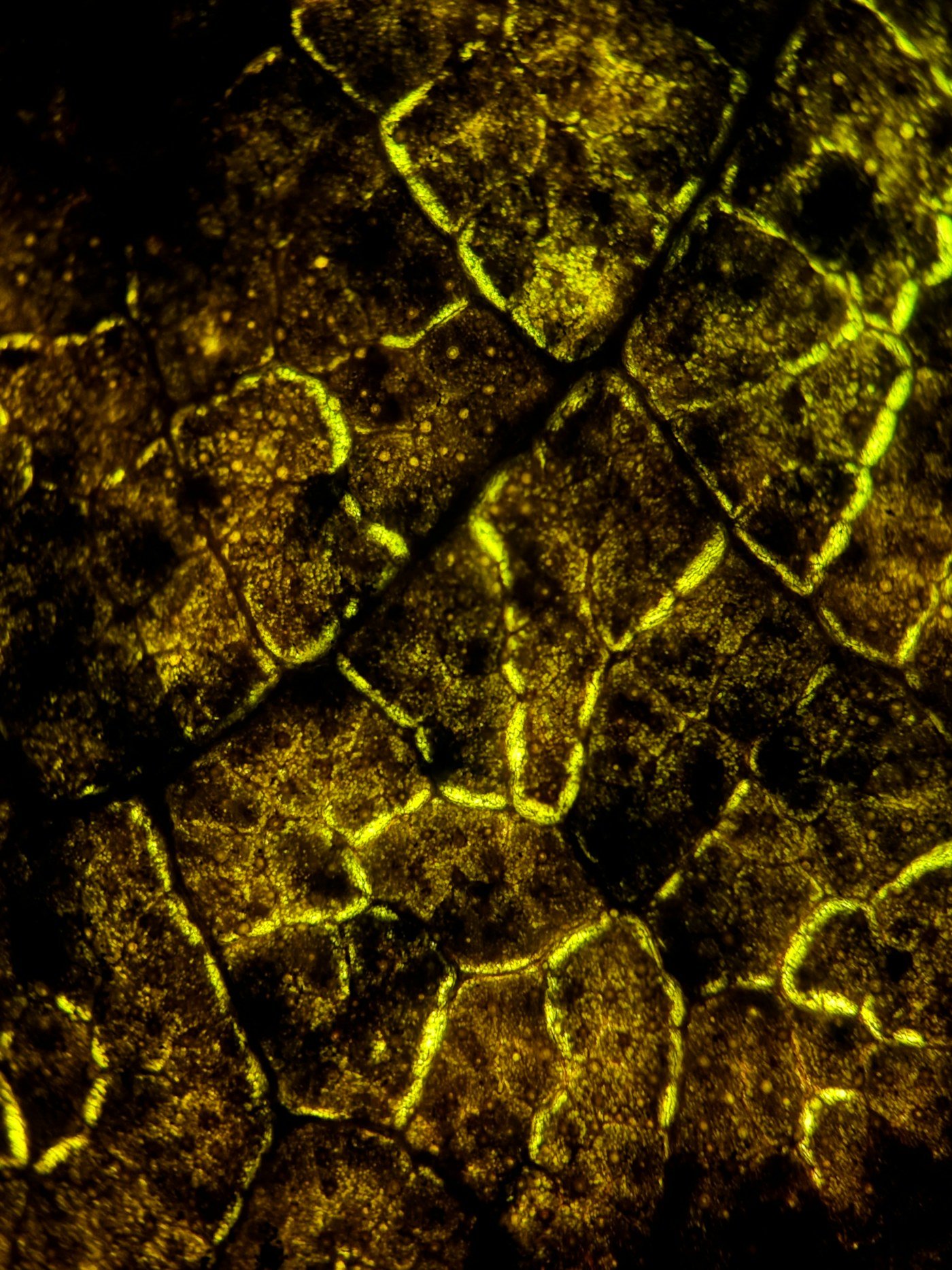
Plant cells contain structures that help them capture light, move water, and build the materials a plant needs. When many cells work together, they form tissues with different jobs. A leaf’s shape, thickness, and surface features can all affect how it interacts with light, water, and air.
At larger scales, plants connect to pollinators, soil organisms, herbivores, and the weather. Biology becomes easier to picture when you move between scales: cell, organism, population, ecosystem.
These short features connect familiar questions to larger biological ideas.
Leaf color depends on pigments and how their amounts shift. Light, temperature, and seasonal changes influence what colors become visible.
Microbes break down materials, cycle nutrients, and live in relationships with plants and animals. Their roles depend on the environment.
Diversity can give an ecosystem more ways to respond to change, but resilience also depends on the kinds of relationships and conditions in that place.
A cell is the basic unit of life. Some organisms are made of a single cell; plants, animals, and many fungi are made of many cells with different roles.
An ecosystem includes living things and the nonliving parts of their environment, along with the interactions among them.
Classification provides a shared way to describe relationships and organize observations. Scientific classifications can change as evidence improves.