ORBITS
Why do planets appear to wander?
Planets orbit the Sun at different speeds and distances. As Earth and another planet move, their positions against the background stars seem to shift.
Explore stars, planets, orbits, and the instruments that help astronomers study objects far beyond Earth. Every observation is a clue, and many clues are needed to build a strong explanation.
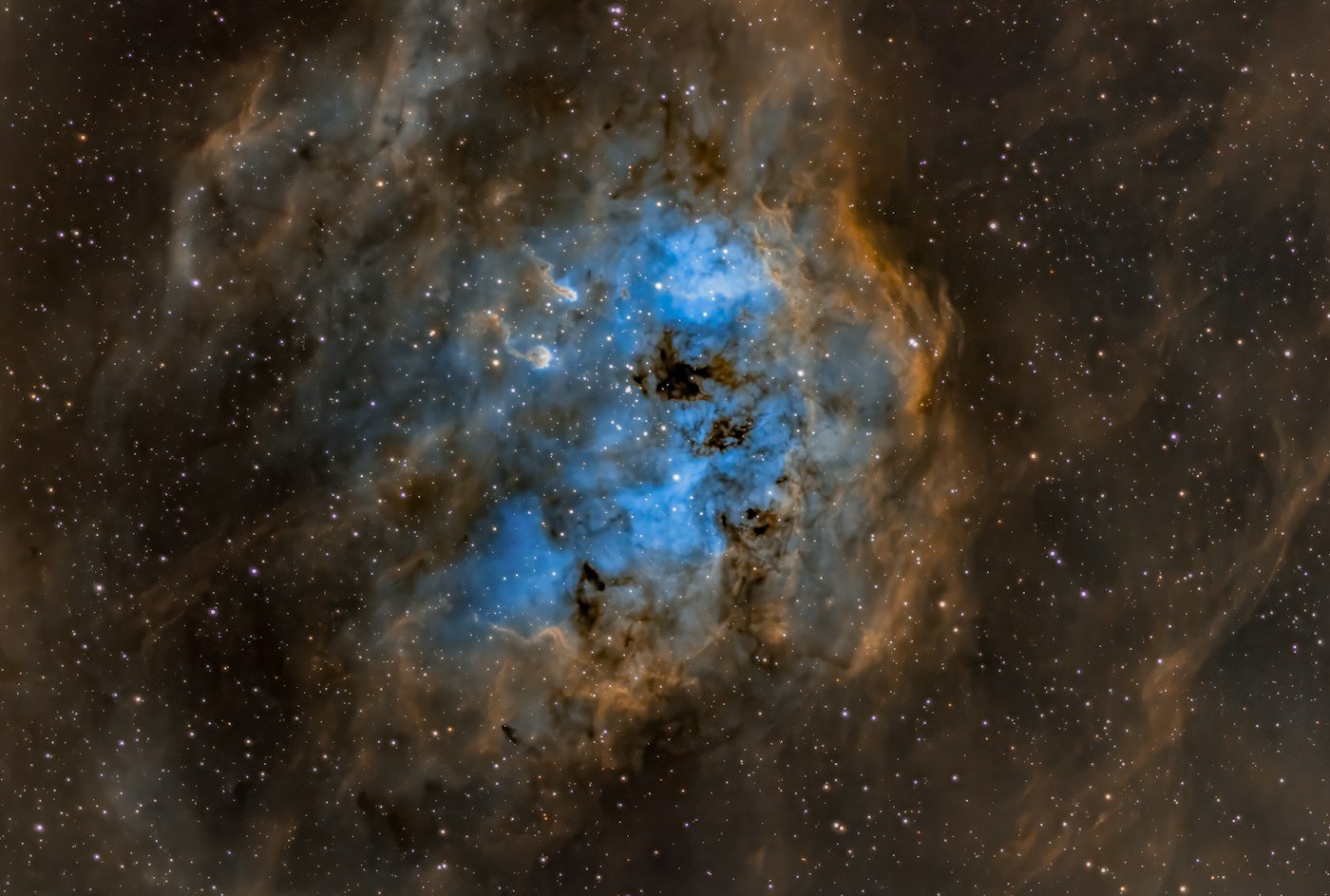
Telescopes collect light that human eyes cannot always see on their own. By comparing brightness, color, and changes over time, astronomers can investigate stars, planets, and distant galaxies. Different instruments reveal different parts of the story, from visible light to radio waves and infrared signals.
When you look at a distant object, you see light that has traveled to you. That means astronomy also offers a way to study the past: the farther the light has traveled, the earlier the event that sent it.
Use these explainers to connect familiar sky patterns to the physics behind them.
Planets orbit the Sun at different speeds and distances. As Earth and another planet move, their positions against the background stars seem to shift.
Stars release energy through processes in their cores. The light and other signals that reach telescopes help astronomers investigate how stars change over time.
Some planets are detected by measuring small changes in a star’s light or motion. Each method has strengths and blind spots, so astronomers use multiple techniques.
An orbit is the path one object follows around another because of gravity and motion. Orbits can be nearly circular or more stretched out.
Stars are very far away. Their apparent size in the sky is mostly too small to distinguish without special instruments, even though stars can be enormous.